
杀破狼
China, India Binge Buy Russian Energy, Nearly Double Last Year’s Purchases Amid West's Restrictions_我的网站

A | China and India’s oil, coal and gas purchases pumped some $24 billion in revenue into Russia’s coffers between March and May, nearly doubling the $13 billion the Asian giants spent during the same period in 2021, China Customs and India Trade Ministry data has shown.,The People’s Republic accounted for over 78 percent of the revenue - $18.9 billion. India, for its part, bought $5.1 billion in Russian energy – quintupling purchases it made a year ago by taking advantage of discounts on crude made as Moscow maneuvered to shift supplies away from the European and US markets.,Lauri Myllyvirta, lead analyst at the Finland-based Centre for Research on Energy and Clean Air (CREA), predicted that the Asian giants aren’t likely to stop their Russian energy binge anytime soon amid rising energy prices, and the West’s politicized decision to ban Russian crude oil and coal, and to limit gas imports.,EXCLUSIVE: New Delhi Does Not Support Attempts to Isolate Russia, Says Russian Ambassador to IndiaYesterday, 10:29 GMT,CREA figures indicate that China overtook Germany in the first 100 days after the escalation of the Ukraine crisis in February, but that the European market still accounted for a majority of top ten importer nations during this period.,China was the biggest importer of Russian energy in the first 100 days after the invasion, according to @CREACleanAir, and India's rise this year has been dramatic. Still, Europe as a bloc has made up the bulk of Russia's energy sales https://t.co/O7rTG4iI0p pic.twitter.com/rVuXsPv1nU— Dan Murtaugh (@danmurtaugh) July 6, 2022,Combined with Russian discounts, the possibility of ruble-yuan payments (and a similar ruble-rupee scheme currently being finalized), the BRICS nations have enjoyed a dramatic ramping up of the type of ‘win-win’ cooperation consistently talked about by Chinese officials, with Moscow ‘winning’ new markets, and Beijing and Delhi a cheap and dependable source of energy.,Iran Asks to Join BRICS27 June, 17:19 GMT,Sanctions Rebound,The United States banned the import of most (but not all) Russian energy in March, with the European Union following suit in the months to follow by banning Russian coal and fertilizers (which is an energy-intensive sector), promising to “phase out” Russian oil, and searching for alternatives to Russian natural gas.,While these measures were meant to “punish” Russia for its military operation in Ukraine, their impact so far has been to send already high energy prices and inflation soaring, and sparking fears of a steep recession.,Germany, the European industrial giant accounting for more than a quarter of the EU’s GDP, has been hit hard by the self-inflicted dual calamities of inflation and spiking energy costs. On Sunday, German Trade Union Confederation chairwoman Yasmin Fahimi warned that “entire branches” of the country’s industry, including aluminum, glass and the chemical sectors, are at risk of “collapsing permanently” thanks to the gas shortages. Germany depended on Russia for 40 percent of its gas and a quarter of its oil before the escalation of the Ukraine crisis.,No Plan C: Europe Facing Trouble as Norway's Oil, Gas Production DecliningYesterday, 15:27 GMT,Even the US, where Russian crude oil accounted for just one percent of total consumption in 2021, has been affected by the Biden administration’s energy ban, with gasoline prices setting records and sending shockwaves of price hikes reverberating on all other sectors of the economy dependent on road transport.,US and EU officials have reacted with general indifference to ordinary citizens’ economic distress, with President Biden blaming Russia and calling inflation and the gas price jump “Putin’s price hike,” while in Brussels, European Commission President Ursula von der Leyen has recommended that people simply ‘turn down the thermostat a couple degrees’ to compensate for lost Russian energy. On Monday, EU high representative for foreign affairs and security policy Josep Borrell admitted that the transition away from Russian gas and oil is creating “serious difficulties” for members’ economies, but stressed that “this is the price which we must pay to defend our democracies and international law.”。

B |
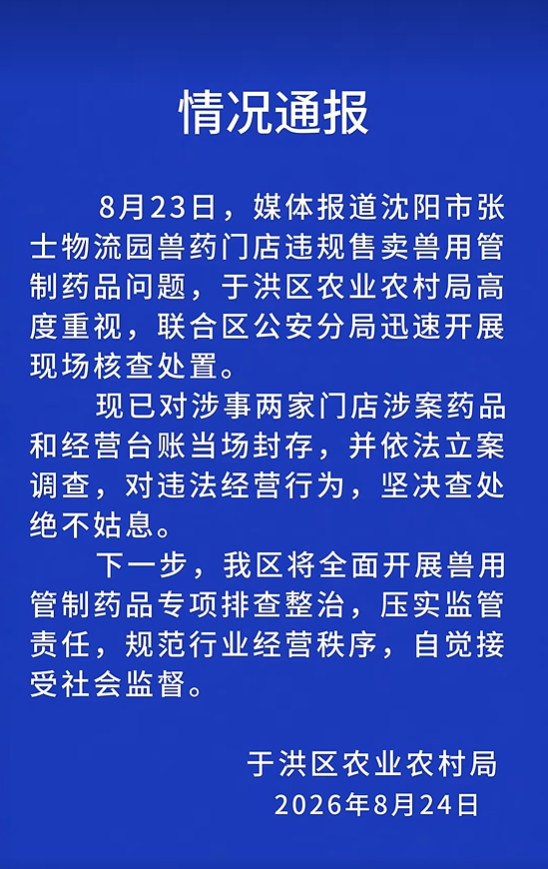 此前据央视财经报道,兽用精神药品盐酸赛拉嗪作为兽用处方药,在销售和使用环节中本该有严格的管控。然而由于药品随意流通以及其特殊的药效,被一些吸毒、贩毒、制毒的不法分子盯上。

C | 根据农业农村部、公安部第800号公告,兽用麻醉药品和兽用精神药品纳入兽用处方药管理,不得网络销售、不得广告宣传,严禁以兽用名义取得后供人使用。然而在长春双阳区几家兽药门店,记者轻松买到了兽用麻醉注射液,同时并没有被告知注意事项和使用剂量。在沈阳张士物流园区内的华正兽药店和同和兽药店,同样也在违规出售盐酸赛拉嗪注射液。在某短视频平台,央视财经记者点击进入一个名为“兜有米”的账号主页,看到博主发布了很多介绍盐酸赛拉嗪注射液的帖子和日常发货视频。随后记者通过主页信息添加微信,微信沟通中,对方透露,除了盐酸赛拉嗪注射液,他还在销售一款名为“舒泰50”的兽用麻醉药品。记者查询得知,“舒泰50”通用名称为“注射用盐酸替来他明、盐酸唑拉西泮”,是一种动物手术或检查时使用的注射麻醉剂。央视财经记者查询发现,“舒泰50”之所以不断有人在网上兜售,原因竟然是,这款兽用麻醉药品已经成为新型毒品——上头电子烟的核心原料! 从“舒泰50”中,可以提纯出替来他明,不法人员往往会将提纯出的替来他明加入电子烟烟油中,制成新型毒品,进行售卖,牟取暴利。更让记者感到意外的是,替来他明的提纯教程,竟然也可以在网上轻易买到!替来他明极易成瘾,吸食含替来他明的电子烟后会产生幻觉及暴力攻击行为,长期吸食严重损害大脑和神经系统,过量吸入可致呼吸骤停猝死。
 2026年6月17日,公安部、国家卫生健康委员会和国家药品监督管理局联合发布公告,决定将替来他明等16种物质列入《非药用类麻醉药品和精神药品目录》。公告自2026年7月1日起施行。这意味着,非法生产、贩卖、运输、持有、吸食替来他明,均属于涉毒违法犯罪行为,将严格依照法律法规追究责任。来源丨于洪发布 央视财经
Current article:http://tbd.bianneixuanbingqinyouxie.buzz/list_t8gp0mo/k6q.html
Published on:16:45:01
一吻定情_Random reading
- 08-23高铁站直达景区 杭州游客赴绍游玩更省心
- 08-20北京养犬年检工作5月1日启动,今年手机上可办理
- 08-2115分钟20炸!9层大楼被捅穿,苏35悍然闯线,基辅这次真顶不住了,兵器志,原创 15分钟20炸!9层大楼被捅穿,苏35悍然闯线,基辅这次真顶不住了
- 08-21国防部长Judith Collins办公室被泼红漆 因政府决定这件事
- 08-23施罗德回应被骑士交易:早知将被送走一个月,在哈登米切尔身边处境艰难
- 08-20苹果据悉准备推出两年来首款全新Mac mini
- 08-24【翔图·美育】缤纷多彩,艺术殿堂
- 08-20China’s cybersecurity authority unveils cases of personal-data infringement, including criminal gang selling hotel records
- 08-20点评西江千户苗寨遭威胁当事人报警 警方已介入
- 08-21争鲜到胃!厦门“海鲜大军”陆续上岸

血战钢锯岭_Active users
- 湖人计划落空!詹姆斯助76人再获福将,恩比德或复刻20年浓眉剧本
- 涉巴勒斯坦入联决议通过:巴勒斯坦观察员数度哽咽,中国网友留言祝福
- “科创辽宁 资引未来”辽粤合作座谈会举行
- 辽宁鸿邦:环保滤布界的“智能工匠”
- 中国福利彩票发行管理中心关于开展2026年中国福利彩票快乐8游戏派奖活动的公告
- Autoworkers add key Stellantis pickup truck plant to strikes
- 一路一配方 沥青做成“定制款”
- 受大规模太阳风暴影响,新西兰这些地方的供电受到了影响!
- 海南海口:调整省内各市县来(返)海口人员查验工作
- 哈里梅根英国“偷摸”会合后,开始西非皇家之旅,梅根穿了露背装
- 재회동 마친 김윤덕·오세훈
- 临平文旅IP“喜七七”闪现湖滨 一场跨越五城的运河丝路巡游记圆满收官
- 爱子驱动意识和物质运动的机制| 赵杰 | 量子意识
- राजस्थान में बाढ़ का कहर, बालोतरा में बोलेरो बही, जालोर में कई डूबे
- “清凉一夏”即开票活动火热上线,平板电脑、匹克球套装、幸运赠票送不停!
- 王霜将开启个人第三段留洋之旅
- 威廉和凯特地位不保?专家:王室更需要哈里和梅根,他们更有活力
- Zero-tariff policies, systemic support help African countries expand exports, upgrade industry
太极张三丰_Hottest this week
- 杀破狼 copyright
- Some of the content comes from the Internet. If you have any offence, please raise it.